

You know these situations. So do we — since 2007.
We hear the same problems in thousands of conversations with production managers, production schedulers and plant managers. Here they are — and what infoBoard actually does about them.
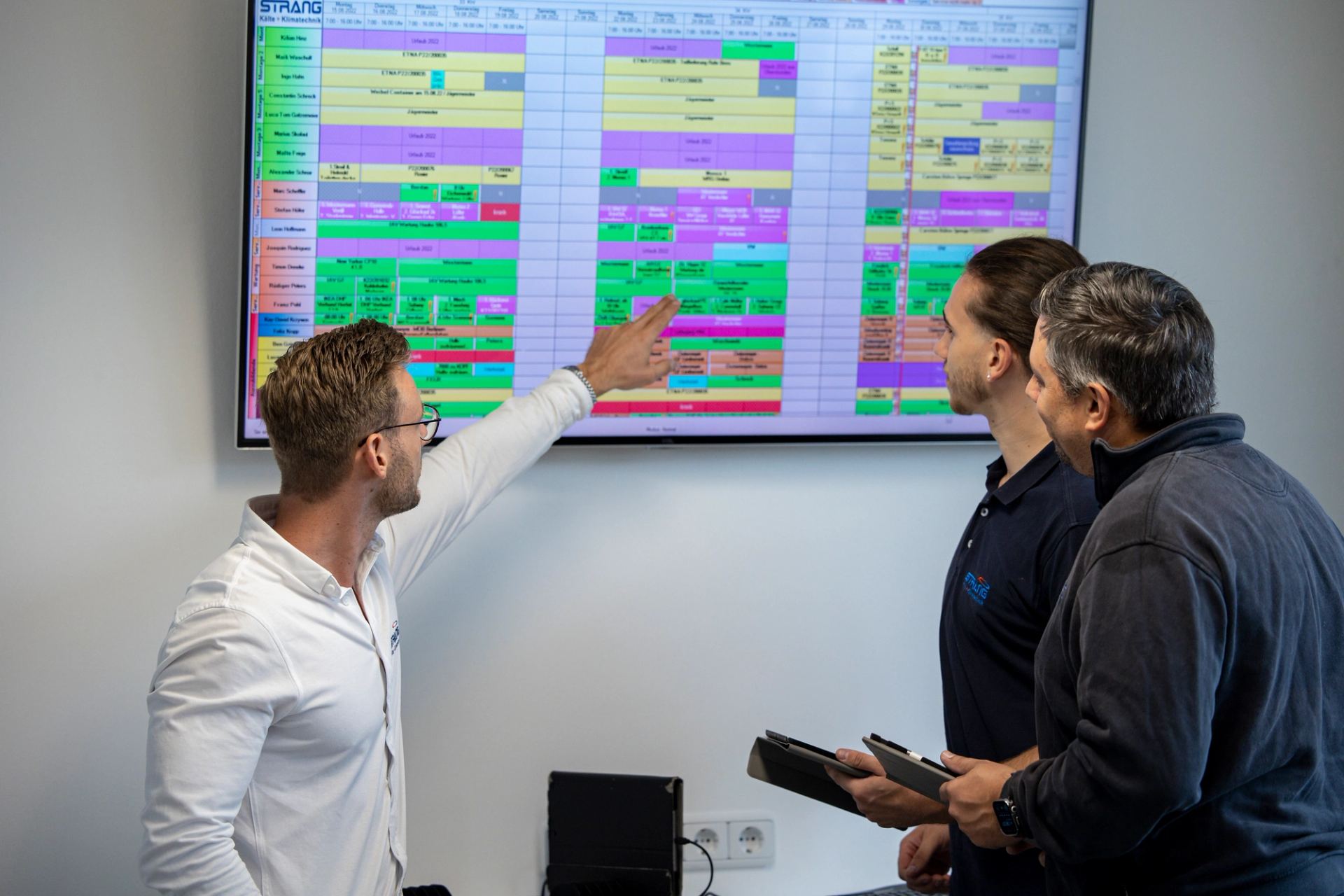
Production scheduling is complex. But most problems follow recognizable patterns.
Company A and company B make completely different products. But the scheduling problems they describe are strikingly similar. That is not because of the people who do the scheduling. It is because of the tools they have to work with.
The good news: these problems can be solved. Not with process consulting. Not with projects that run for months. With a digital planning board that sees what is happening — and lets your planners react to it.
Eight situations. One cause. One fix.
We have seen every one of these situations in practice — in small contract manufacturers and in companies with hundreds of machines.
A rush order comes in — and nobody knows what it costs.
A rush order means rescheduling. But without a capacity view it is unclear what has to move — and whether the deadline can be held at all. With infoBoard you see immediately what is free. Schedule corrections used to take hours. Our customers now make them in under 30 minutes.
The schedule exists three times — and no version is right.
Spreadsheet A is current. B has been saved. C went out by email. Meanwhile the situation has changed — and nobody knows which version applies. infoBoard has one schedule. Everyone sees it. Always current.
The machine is overbooked — and you notice three days too late.
Nobody overbooks on purpose. It happens because nobody has a complete capacity view. In infoBoard the capacity view shows bottlenecks before they turn into a crisis. Companies report considerably fewer emergency shifts.
Setup times eat capacity — and they do not have to.
When similar orders run back to back, setup time drops considerably. Without a visual overview that rarely happens systematically. infoBoard groups similar orders together — customers report up to 30% less setup time.
Manufacturing, assembly and purchasing schedule side by side — not together.
Every department has its own schedule. Manufacturing does not learn in time what assembly needs. What purchasing delivers reaches the schedule too late. infoBoard shows everyone the same thing — in real time, on every screen in the plant.
The customer asks about the delivery date. Nobody can answer straight away.
Confirming a date sometimes means: wait, ask around, estimate. That costs trust. infoBoard shows production progress in real time. You can confirm dates reliably straight away — or communicate a delay early.
The ERP has all the data — and nobody uses it for scheduling.
Orders, master data, capacity limits: all there, just not visible. infoBoard reads straight from your ERP and brings that data onto the planning board. What used to sit dormant in reports becomes the basis for scheduling.
What if? — You ask yourself that every day, but the answer takes too long.
Pull a rush order forward, swap a machine, move a shift — what does that mean for everything else? In simulation mode you play through scenarios without touching the live schedule. Only once you are sure do you adopt the new plan.
- 17%time savedin daily scheduling
- < 30 minfor complex reschedulinginstead of several hours
- 1 schedulefor everyone involvedin real time, no versions
- 900+companies solve these problems with infoBoard every day
Excel was never built for production scheduling. It was used for it because there was nothing better.
Excel is flexible, widespread and free. That is why it has been the scheduling tool of choice in manufacturing for decades. Not because it is good at scheduling, but because it was already there.
The problem: Excel has no concept of real time. It has no capacity limits. It has no automatic dependencies. When one order moves, every other one has to be adjusted by hand — if anyone hears about it at all.
infoBoard does not force Excel out. Many companies start by importing their existing Excel structure. The scheduling logic stays — but the limitations disappear.

Problems solved. Every day. In 34 countries.
Which of these problems do you recognize?
Show us how you schedule day to day — 30 minutes, your own data, no generic presentation. We show you exactly how infoBoard solves it.